
 All resources
8 signs it's time to hire a demand generation agency
See when agency help fits your team, what to fix first, and when an in-house hire makes more sense. Check each sign against your own records first.



The short answer
Hire a demand generation agency to run campaigns when you know who you sell to but lack the skills, time, or connected plan to grow. Not clear on your buyers yet? Outside help with buyer research and strategy still makes sense, but hold campaign spend until that work is done. Either way, first check whether the gap is in strategy, execution, process, or data. An agency can fill a defined gap. It can't replace a clear owner on your side.
This guide is for business-to-business (B2B) software and tech marketing leaders. You'll get eight signs and the records to check for each. Then you'll pick a next step: hire help, fix something first, or hire a person.
Want a quick read on where you stand first? Take the free Demand Generation Maturity Assessment (DGMA). It takes about four minutes.
Check the sign before you trust it
Most lists of signs stop at the feeling: "Our leads are bad." "We're stretched." Feelings don't tell you what kind of help to buy.
So treat each sign like a smoke alarm. Before you call anyone, check the room. Each sign below comes with records to inspect before you decide what help you need. If they don't back the sign up, the problem may be somewhere else.
| Sign | Record to check | What it usually calls for |
|---|---|---|
| 1. Skills your team doesn't have | Last quarter's plan vs. the work that shipped | Agency or contractor for the missing skill |
| 2. No shared plan | A written plan sales and marketing both use | Strategy help first |
| 3. Spend with no opportunities | Campaign touches vs. opportunities, over one full sales cycle | A diagnosis before more spend |
| 4. Channels that don't connect | Messages and offers by channel, side by side | One plan across channels |
| 5. Messaging that misses | Win and loss notes, sales call notes | A closer look at the cause, then the fix |
| 6. Tracking nobody trusts | Source rules, plus blank or conflicting records | Fix tracking first |
| 7. A new market with no research | What you know about the new buyers | Research before campaigns |
| 8. Growth beyond your team's hours | Planned work vs. what got done | Agency hands or a new hire |
The 8 signs, and how to check each one
1. Your team is missing a skill the plan needs
Your plan calls for paid search, email automation, or analytics. Nobody on the team has done that work at the level the goal needs. The work either waits or gets done halfway.
Check it: Put last quarter's plan next to what shipped. If work that needs the same skill keeps slipping, find out why. Check whether skills, time, priorities, or approvals held it up.
What fits: An agency or a contractor can cover a skill gap fast. If you'll need the skill for years, a partner can keep covering it, or cover it while you build the team.
2. Sales and marketing don't share one plan
Marketing has a calendar. Sales has a number. They don't come from the same written plan. Every quarter starts with a debate about what counts as a good lead.
Check it: Ask both leaders for the current plan. If no plan exists, or the plans disagree on buyers, goals, or lead rules, this sign is real. Two plans that agree on all three are fine.
What fits: Strategy help comes first. Extra campaigns won't fix plans that disagree on buyers, goals, or lead rules.
3. You're spending, but opportunities don't show up
The budget goes out every month. Leads come in. But when you look for sales opportunities, the numbers don't add up to the spend.
Check it: Compare campaign activity with opportunities in your customer relationship management (CRM) system. Use a window at least as long as your sales cycle. If deals take six months, one quarter is too short. Look at which campaigns touched each opportunity before it opened.
Expect messy answers. Most deals have several touches, and some have none on record. Your CRM shows what got recorded, not necessarily what caused the deal. Look for patterns across many deals.
What fits: A diagnosis before you raise spend. More leads won't help if the path from lead to opportunity is broken.
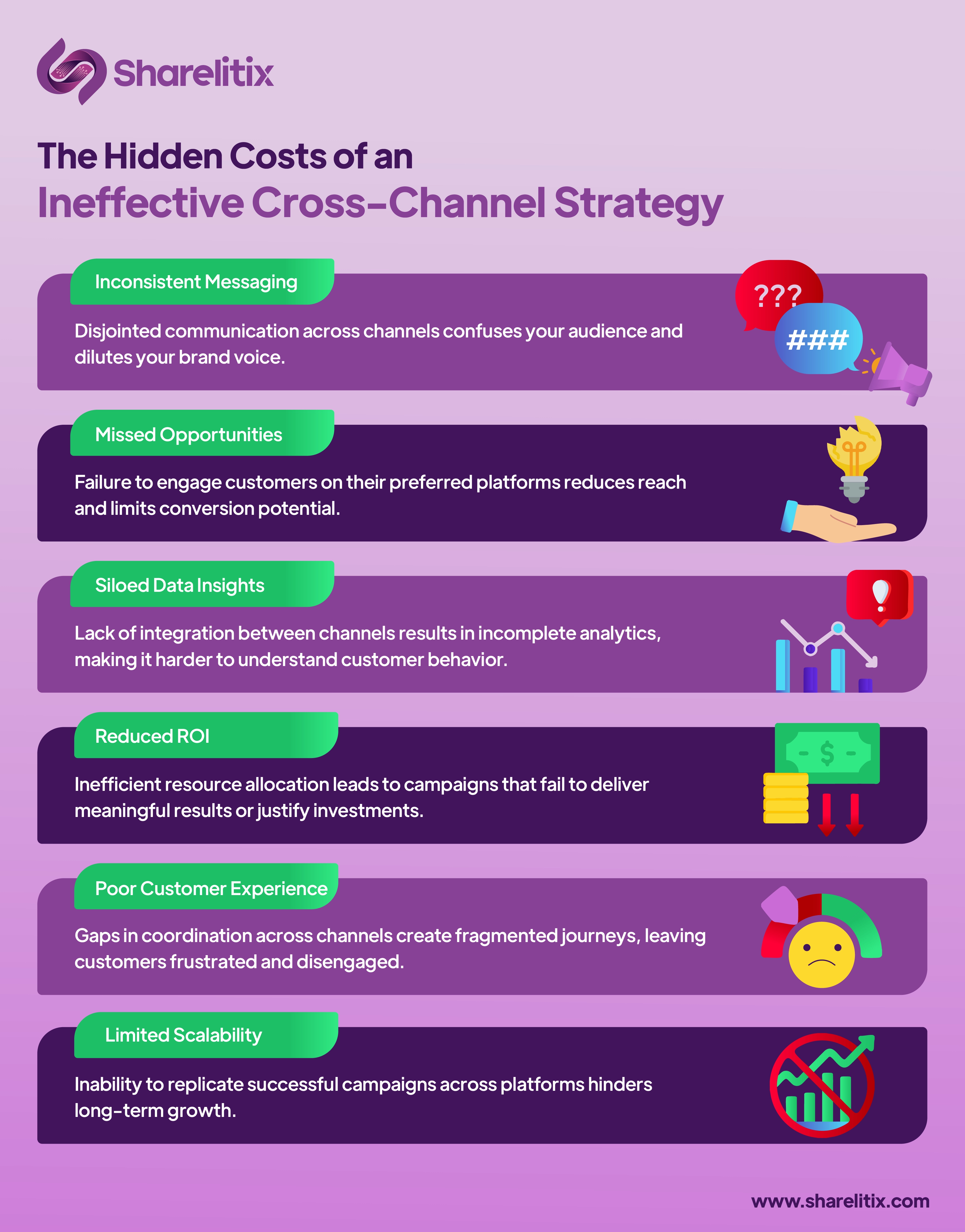
4. Your channels run on their own
Paid social says one thing. Email says another. The website offers a third thing. Each channel might look fine alone, but buyers see a mess.
Check it: Line up last month's ads, emails, and landing pages in one view. Do they tell one story to the same buyer?
What fits: One plan across channels. An agency helps here when it plans the channels together, even if it only runs some of them.
5. Your messaging misses the buyer
Click rates are low, demos stall, and sales says prospects "don't get it." That's a reason to look closer, not proof of the cause. The wrong audience, a weak offer, or slow follow-up can look the same. One cause to check is copy in your company's words instead of your buyers'.
Check it: Read your last ten win and loss notes, or sales call notes. Do buyers describe the problem the way your website does?
What fits: If the notes show a gap, do buyer research, then rewrite. If they don't, check your targeting and offer next. More copy in the same words won't move anything.
6. Nobody trusts the numbers
Every report starts a fight. One tool says paid search drives most leads. The CRM says something else. Leadership stops believing either.
Check it: Pick five recent leads. Look at how each one's source got set in your CRM. Typing it in by hand isn't a problem by itself. Check three things. Is there a written rule for setting it? Do people follow it? How many records are blank, or disagree from one tool to the next? If you can't answer those, the data can't carry big decisions yet.
What fits: Fix tracking before you buy more campaigns. You can do that in-house or with outside help. Plans built on bad numbers send budget to the wrong place.
7. You're entering a new market with no research
You're adding a new industry, region, or buyer type. The plan is to reuse what worked before.
Check it: Write down what you know about the new buyers: their roles, their problems, and where they look for answers. If the page is mostly guesses, the research isn't done.
What fits: Research before campaigns. A partner who's done buyer research before can shorten the learning curve.
8. Growth has outrun your team's hours
Good news, with a cost. The goal went up, and the team didn't. Planned work slips every week.
Check it: Compare planned work with finished work for the last month. A steady gap is a reason to look closer, not proof you're short on hours. For each item that slipped, ask why: too few hours, shifting priorities, slow approvals, or a missing skill.
What fits: If hours are the real limit, agency hands can cover the work your team can't reach. If the gap will last, an ongoing partner and a new hire can both work. Compare the full cost of each. If priorities or approvals are the cause, fix those first, since more hands won't speed them up.
System problem or campaign problem?
When several of these signs show up at once, the cause is usually the whole system. When I look at a team, these four things tell me it needs a system fix:
- They don't know where their pipeline is coming from
- They don't know what their marketing activities are producing
- They aren't sure what to do more of to get more results
- They don't know where their biggest gaps are, or what's blocking the next phase of growth
If that sounds like your team, another campaign won't answer those questions. You need a way to connect what you do to what you get. That's the work to scope first.
When not to hire an agency yet
Sometimes the honest answer is "not yet," at least for campaign work. An agency hired to run campaigns needs a clear target. Without the foundations below, it's guessing, and you're paying for the guesses.
I've told teams not to hire an agency yet when their foundations were missing. These are the gaps:
- No clear target audience or ideal customer profile (ICP)
- No clear picture of the buying committee: the decision makers, influencers, and blockers
- Missing core brand elements
Fix those foundations first. You can build on them later.
That's a reason to wait on paying for campaigns, not on help with the foundations. A strategy partner can research your buyers and help you pick your target audience. If you go that route, judge the work on one thing: can your team use it to plan campaigns?
Agency, in-house hire, or contractor?
Each option solves a different problem. Here's how they compare on the things that change your day.
| Agency | In-house hire | Contractor | |
|---|---|---|---|
| Range of skills | Several skills at once | One person's skills | Usually one skill |
| Who owns the plan day to day | Shared; you still own the goal | Your team | Your team |
| Your management time | Set the goals, review the work | Hire, train, and manage | Brief and review each task |
| Access to your data | What its work needs | Set by role and need | Limited to the task |
| Best when | Many gaps, ongoing work, or speed | One skill, full time, for years | One clear, short task |
Don't assume an agency costs less. Compare the full cost of each option: fees or salary, tools, ad spend, and the hours your own team spends managing the work.
When you've decided an agency is the right call, read how to choose a demand generation agency.
What to bring before you hire
You don't need everything sorted before you talk to an agency. But the more of this you bring, the faster the work starts:
- Your goals, if you have them. They aren't required. A good partner can help you set them. If you have them, share them so the agency understands what the company is trying to do.
- A rough idea of budget
- Access to your information: your systems and data
- A clear owner on your side
- A plan for how sales will follow up on the leads that come in
- Your timeline: start now, or later
Have most of this ready? Book a Strategy Call to talk through your gaps and where to start.
One example: when activity didn't tie to revenue
Here's how sign 3 looked from the inside, in one of my roles before Sharelitix. I led demand gen in-house at a Series C biosafety technology company.
The gap that mattered most was the link between marketing activity and the end results: pipeline and revenue. That link wasn't clear. So the first change was to tie the on-the-ground work across channels, and the large spend behind it, back to pipeline and revenue. That happened in our Salesforce CRM and our marketing automation platform.
That built a feedback loop across the whole system. The team could see where things broke down and where they worked. Then we could do more of what worked.
The lesson for your own team: you can't scale what you can't trace. If sign 3 is real for you, fix that link first, in-house or with help, before you add channels.
Match the gap to your next step
Once you know which signs are real, pick the help that matches. The Share Pro Blueprint splits the work into parts you can start at:
- "I want an honest read." You're spending, but you can't say what's working. Start with a Health Check. It looks for channel and funnel gaps, and for tracking issues that affect your decisions.
- "I'm about to scale spend." Know your stage before more money goes in. Start with the Maturity Assessment.
- "I already have a diagnosis." Turn the findings into one plan your team can run. Start with the plan.
Not sure where you stand? The free DGMA asks 20 questions and gives you a rough stage in about four minutes. It's a self-check, not a full diagnosis. Use it to decide which signs to look at first.
Want a second opinion on your gaps? Book a Strategy Call. We'll go over your goals and pipeline, share next steps you can act on, and tell you honestly whether Sharelitix is the right fit.
Questions people ask
What is a demand generation agency?
A demand generation agency helps a company attract the right buyers, qualify their interest, and turn it into sales pipeline. Some agencies plan the strategy, some run the channels, and some do both. Ask which one you're buying before you compare prices.
When should you hire a demand generation agency?
Hire one to run campaigns when you know who you sell to but lack the skills, time, or connected plan to grow. Check the gap against your own records first. If your target audience, buying committee, or core brand isn't clear yet, start with buyer research and strategy. A strategy partner can help with that work. Hold campaign spend until it's done.
Is an agency or an in-house demand gen manager more expensive?
It depends on what you need. Compare the full cost of each: salary or fees, tools, ad spend, training, and your own team's management time. An agency gives you several skills at once, for as long as you need them. A hire gives you one person's skills, full time.
Can an agency fix poor lead quality?
It can help, but only with your sales team in the loop. Lead quality depends on who you target, the rules that decide when a lead goes to sales, and how fast sales follows up. Be wary of any agency that promises better leads without asking about all three.
What should you fix before hiring an agency?
Get clear on your target audience, your buying committee, and your core brand, on your own or with a strategy partner. Name an owner on your team, give the agency the access its work needs, and agree how sales will follow up. Goals help too, but a good partner can help you set them.